Our Research Builds the Next-Generation
AI-Powered Sensing and Communications Systems
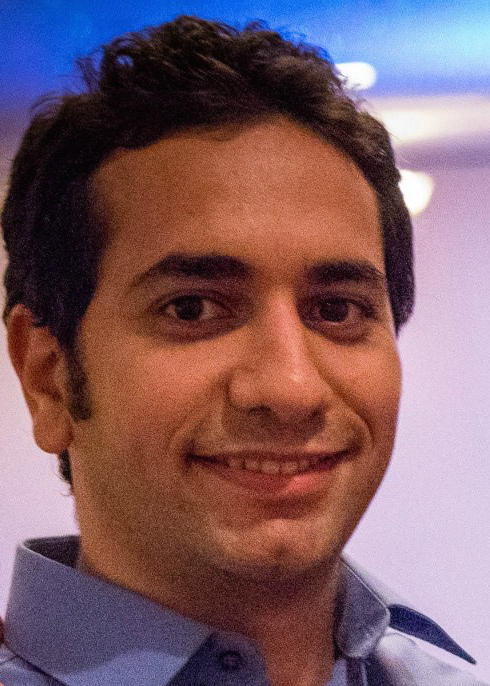
Directed by Prof. Ahmed Alkhateeb, the Wireless Intelligence Lab focuses on leveraging signal processing and machine learning to address the key challenges of future wireless communication systems and enable new sensing and positioning capabilities. We develop enabling technologies, mathematically evaluate their theoretical limits, build proof-of-concept hardware prototypes, and demonstrate the developed solutions in real-world environments.
Announcement
We are always looking for highly-motivated Ph.D. students to join our lab. Interested students are encouraged to contact Prof. Alkhateeb with a brief resume.
News
May. 2026
Ph.D. students Hao Luo and Namhyun Kim are interning at InterDigital in Summer 2026.
Ph.D. student Sadjad Alikhani is interning at TeraSpatial in Summer 2026.
Ph.D. student Kengmin Lin is interning at VIAVI in Summer 2026.
Jan. 2026
Five papers have been accepted to the IEEE ICC 2026.
LWM-Temporal: Sparse Spatio-Temporal Attention for Wireless Channel Representation Learning
LWM-Spectro: A Foundation Model for Wireless Baseband Signal Spectrograms
Digital Twin Aided Millimeter Wave MIMO: Site-Specific Beam Codebook Learning
Low-Complexity Digital Twin for CSI Acquisition in MIMO Communications
Generative Decoding of Compressed CSI for MIMO Precoding Design
Jan. 2026
The paper “Wireless Dataset Similarity: Measuring Distances in Supervised and Unsupervised Machine Learning” is available on arXiv.
Oct. 2025
Dr. João Morais presented his paper “Comparing Stochastic and Ray-tracing Datasets in Machine Learning for Wireless Applications” at Asilomar.
Oct. 2025
The paper “RIS-Aided mmWave O-RAN: Coverage Extension and User Mobility Handling” is available on arXiv.
Oct. 2025
Shuaifeng Jiang successfully defended his Ph.D. dissertation and joined Bosch. Congratulations!
Oct. 2025
The blog post “DeepMIMO: The Data Foundation for Wireless AI Created by ASU Researchers” has been published.
Oct. 2025
Ph.D. student Tawfik Osman has won the “Best Demo Paper Award at IEEE MILCOM 2025” for his paper “Real-Time User Mobility Handling in RIS-Aided mmWave O-RAN Systems“.
Sep. 2025
The paper “Digital Twin Aided Massive MIMO CSI Feedback: Exploring the Impact of Twinning Fidelity” has been accepted to the IEEE Transactions on Communications.
Aug. 2025
João Morais successfully defended his Ph.D. dissertation and joined Nvidia. Congratulations!
Support
The Wireless Intelligence Lab is grateful for the support it is receiving from the following organizations